


Best Time to Visit Leh Ladakh by Bike in 2026
I remember sitting at Khardung La in 2019, watching a rider from Gujarat struggle to kick-start his Royal Enfield in the thin air. His timing was off by three weeks. He’d arrived in early May, and half the route from Manali was still buried under snow. That single miscalculation turned his dream trip into a week of waiting in Manali for roads to open.
The best time to visit Leh Ladakh by bike falls between June 15 and September 20. This window gives you clear roads, manageable weather, and access to all major passes. But here’s what most guides won’t tell you: the “best” time depends entirely on what kind of experience you’re chasing.
Why June to September Works for Leh Ladakh Bike Trips
Both entry routes to Leh, the Manali-Leh Highway and the Srinagar-Leh Highway, remain fully operational only during these months. The Border Roads Organisation typically clears the Rohtang Pass by late May and Baralacha La by mid-June. Khardung La, often marketed as the world’s highest motorable road at 17,982 feet, stays accessible from June through October.
Temperature during these months ranges from 5°C to 25°C in the valleys. You’ll face cold nights, especially at high-altitude campsites like Sarchu or Pang, where temperatures drop to minus 5°C even in July. But daytime riding remains comfortable in standard motorcycle gear.
Oxygen levels at passes above 15,000 feet are roughly 40% lower than at sea level. Your body needs 48 to 72 hours to acclimatise properly. Rushing through, which many first-timers do, almost guarantees altitude sickness.
Month by Month Breakdown for 2026 Planning
June: The Early Window
Early June remains risky. Snow walls along Baralacha La and Tanglang La can still reach 15 feet in some sections. By June 15, conditions stabilise. Crowds are thinner, and you’ll find better rates at guesthouses in Leh. A double room at Changspa Road runs around 1,200 to 1,800 rupees per night.
The catch? Water crossings between Pang and More Plains are at their most aggressive. Snowmelt feeds these streams, and by noon, a gentle crossing from morning becomes a knee-deep torrent. Leave Sarchu by 5 AM to beat the melt.
July and August: Peak Season Reality
These months bring the heaviest traffic. You’ll encounter convoys of 20 to 30 bikes moving together, especially on weekends. Accommodation in Leh books out weeks in advance. Expect to pay 2,500 to 4,000 rupees for the same rooms that cost half as much in June.
However, all roads including the Nubra Valley route via Khardung La and the Pangong Lake circuit are fully operational. Permits for Nubra and Pangong require advance booking through the Leh DC office or registered travel agents. The fee structure for 2026 stands at approximately 600 rupees for Indian nationals for a combined Nubra-Pangong permit valid for seven days.
September: The Sweet Spot Most Miss
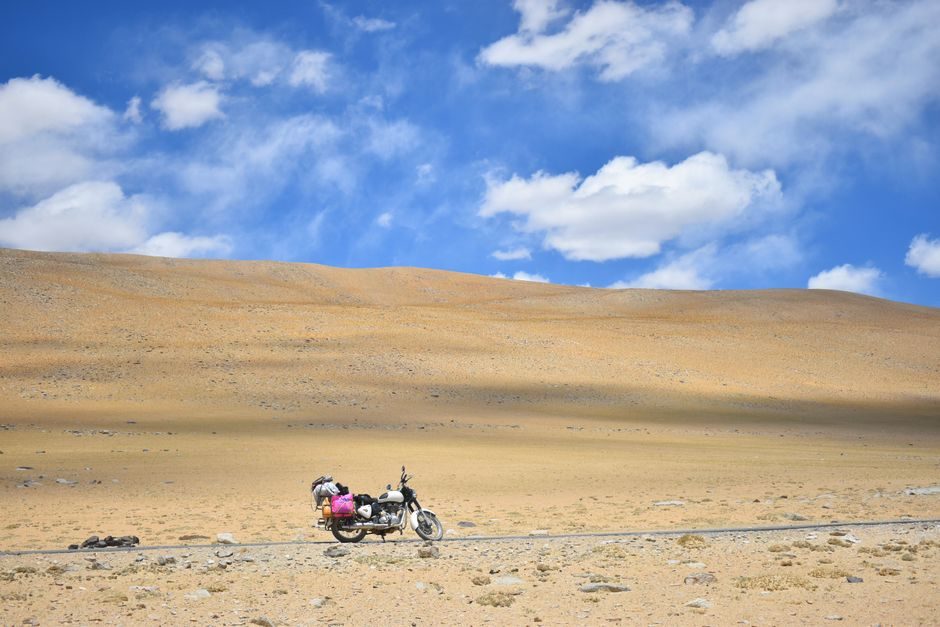
September rarely gets the attention it deserves. Monsoon clouds from the Indian plains don’t reach Ladakh’s rain shadow, so weather stays dry. Crowds thin dramatically after September 10. The landscape shifts to golden brown as autumn arrives, offering a photographic quality that July’s harsh light simply can’t match.
Roads begin showing wear from the summer season. Expect fresh landslide debris near Zingzingbar and Gata Loops. The BRO works continuously, but delays of one to three hours are common.
Which Route Should You Actually Take
The Manali-Leh Highway covers 479 kilometres with five major passes above 15,000 feet. It’s the more dramatic route, with rapid altitude gains that challenge both rider and machine. Most complete it in two days, with an overnight halt at Sarchu or Jispa.
The Srinagar-Leh Highway stretches 434 kilometres with more gradual elevation changes. Zoji La at 11,575 feet is the only serious pass until you approach Leh. This route suits riders worried about altitude sickness or those on less powerful motorcycles.
My recommendation? Enter via Srinagar, exit via Manali. Your body acclimatises gradually on the gentler Srinagar route. By the time you tackle the Manali stretch heading out, you’ve spent a week above 10,000 feet and adjusted properly.
Realistic Budget for a 2026 Leh Ladakh Bike Trip
Most online estimates lowball the actual costs. Here’s what a 10-day trip from Delhi actually runs:
Bike rental from Delhi or Manali for a Royal Enfield Himalayan costs between 1,800 and 2,500 rupees per day. Factor in a refundable security deposit of 15,000 to 25,000 rupees. Fuel costs approximately 4,500 to 5,500 rupees one way, depending on your riding style and the bike’s condition.
Accommodation along the route varies wildly. Tent stays at Sarchu run 800 to 1,200 rupees including dinner and breakfast. Budget guesthouses in Leh start at 1,000 rupees. A comfortable mid-range option with hot water and Wi-Fi costs 2,000 to 3,000 rupees nightly.
Total realistic budget: 45,000 to 65,000 rupees for a 10-day trip, excluding the security deposit. This covers bike rental, fuel, accommodation, food, permits, and a small buffer for mechanical issues.
Mechanical Realities Nobody Discusses
Your bike will struggle above 14,000 feet. Carbureted engines, including older Royal Enfield models, lose 30 to 40 percent power at Khardung La. Fuel-injected bikes like the Himalayan or KTM 390 Adventure handle altitude better but aren’t immune to issues.
Carry spare clutch and throttle cables, a spare tube, tyre levers, and a basic toolkit. Mechanics in Leh are skilled but expensive, and parts for non-Enfield bikes may need to be shipped from Chandigarh, adding days to your wait.
Puncture repair shops exist every 50 to 80 kilometres on major routes during peak season. The Manali-Leh stretch between Pang and Upshi, roughly 120 kilometres, has the fewest services. Carry at least one litre of spare engine oil for this section.
Permits and Documentation for 2026
Indian nationals need Inner Line Permits for Nubra Valley, Pangong Lake, Tso Moriri, and the Hanle region. Apply online through the Ladakh tourism portal or in person at the DC office in Leh. Processing takes two to four hours for in-person applications.
Carry original vehicle registration documents, valid insurance, a driving licence, and an Aadhaar card or passport. Photocopies don’t work at military checkpoints. Multiple checkpoints between Leh and Khardung La verify documents thoroughly.
Foreign nationals face additional restrictions. Certain areas near the Line of Actual Control require Protected Area Permits with mandatory registered guides. The Hanle dark sky reserve falls under these restrictions.
What Could Go Wrong and How to Handle It
Acute Mountain Sickness affects roughly 25 percent of visitors to Leh. Symptoms include headache, nausea, breathlessness, and disturbed sleep. Diamox, available at pharmacies in Manali and Leh, helps some riders but isn’t a substitute for proper acclimatisation. If symptoms worsen, descend immediately. The nearest hospital with hyperbaric capability is SNM Hospital in Leh.
Road closures happen without warning. A landslide at Zingzingbar in July 2023 stranded riders for 18 hours. Carry enough food, water, and warm clothing for an unexpected overnight stay. Mobile coverage is unreliable, BSNL works best, but even that drops completely between Sarchu and Pang.
I’ll be honest about one thing: this trip isn’t for everyone. If you’ve never ridden at altitude, never handled a heavy motorcycle on gravel, or have underlying health conditions, consider a guided tour first. The landscape is unforgiving, and help is far away.
Final Thoughts on Planning Your 2026 Ride
The best time to visit Leh Ladakh by bike remains mid-June through mid-September, with September offering the best balance of weather, crowds, and road conditions. Book accommodation in Leh at least three weeks ahead during July and August. Allow a minimum of 10 days for the complete circuit, including two full rest days in Leh for acclimatisation and local exploration.
Start physical preparation at least six weeks before departure. Cardio conditioning helps your body process oxygen more efficiently at altitude. Even moderate fitness improvements make a noticeable difference at 18,000 feet.
The mountains don’t care about your schedule or your Instagram goals. Plan conservatively, ride within your limits, and you’ll come back with stories that last longer than any photograph.
0 Comment