

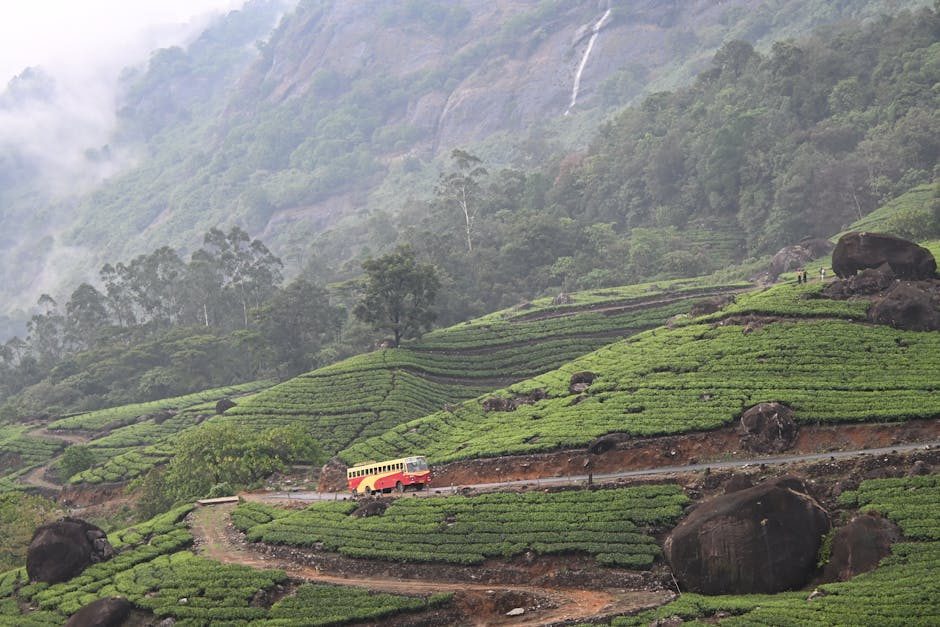

Highest Point in Munnar: Your 2026 Guide to Anamudi
Standing at 2,695 metres above sea level, Anamudi is the highest point in Munnar and the tallest peak in South India. I remember my first glimpse of it from Eravikulam National Park, its massive dome shape cutting through the morning mist like something out of a fantasy novel. Most tourists drive past it on their way to tea plantations without realizing they are looking at a summit that rivals many Himalayan base camps in elevation.
This is not your typical Munnar sightseeing spot. Anamudi requires planning, permits, and a willingness to earn your views. But trust me, the reward is unlike anything else in Kerala.
Where Exactly Is Anamudi Peak Located?
Anamudi sits inside Eravikulam National Park, roughly 13 kilometres from Munnar town centre. The name translates to “elephant’s forehead” in Malayalam, which makes perfect sense once you see its rounded summit profile. The peak marks the convergence point of three major mountain ranges: the Anamalai Hills, Palani Hills, and Cardamom Hills.
Getting to the park entrance at Rajamala takes about 25 minutes by road from Munnar. From there, you will need to take the park shuttle bus to the trekking zones. Private vehicles are not allowed beyond the entrance gate, a rule that has actually helped preserve the area’s incredible biodiversity.
Can You Actually Trek to the Anamudi Summit?
Here is where things get complicated. The summit itself is off limits to regular tourists. The Kerala Forest Department closed public access to protect the fragile shola grassland ecosystem and the endangered Nilgiri Tahr population. However, you can trek to viewpoints that bring you remarkably close to the peak.
The Eravikulam trekking route takes you to an elevation of approximately 2,200 metres, offering panoramic views of Anamudi’s summit. For serious mountaineers, special permits for summit attempts are occasionally granted for research or documentary purposes, but these require months of paperwork and official sponsorship.
The Eravikulam Trek Route
This 7 kilometre round trip trail is the most accessible way to experience Anamudi’s grandeur. The path winds through rolling grasslands dotted with neelakurinji flowers (which bloom spectacularly every 12 years, with the next bloom expected around 2030). You will likely encounter Nilgiri Tahr grazing casually just metres away from the trail.
The trek takes 3 to 4 hours at a comfortable pace. Start early, ideally by 7:30 AM when the park opens, to avoid afternoon clouds that roll in and obscure the views completely.
Best Time to Visit the Highest Point in Munnar
September through May offers the clearest weather for Anamudi viewing. I have visited during October when the post monsoon clarity made the peak look close enough to touch. The winter months from December to February bring the coldest temperatures, sometimes dropping to 5 degrees Celsius at higher elevations, but visibility is exceptional.
Avoid the monsoon season entirely. The park closes from January to March during the Nilgiri Tahr calving season and remains shut during heavy monsoon months (typically June and July). The trails become dangerously slippery, and you will see nothing but white mist anyway.
Monthly Weather Breakdown
October and November are my personal favourites. The landscapes are lush green from monsoon rains, crowds thin out after the Onam rush, and temperatures hover around a pleasant 15 to 20 degrees. March through May gets progressively warmer, but mornings remain cool and perfect for trekking.
Permits and Entry Requirements for 2026
Eravikulam National Park entry costs INR 125 for Indian adults and INR 420 for foreign nationals as of late 2026. Children between 5 and 12 years pay INR 95 (Indian) or INR 210 (foreign). These prices typically see minor revisions each April, so budget for a 10 to 15 percent increase if visiting after March 2026.
Online booking through the Kerala Forest Department website is strongly recommended during peak season (October to January and April to May). Walk in tickets are available but limited to daily quotas. I have seen tourists turned away at 10 AM on busy weekends because slots filled up by 9.
What Documents Do You Need?
Carry a valid photo ID. Aadhaar, driving licence, or passport works fine. Foreign tourists need their passport. The entry ticket includes the mandatory shuttle bus ride within the park. Camera fees are no longer charged separately, a welcome change from earlier policies.
How Does Anamudi Compare to Other South Indian Peaks?
Anamudi stands significantly taller than its regional rivals. Doddabetta in the Nilgiris reaches 2,637 metres, falling 58 metres short. Mullayanagiri in Karnataka tops out at 1,930 metres. Even the famous Kodaikanal peaks like Perumal Malai barely cross 2,400 metres.
What makes Anamudi special is not just the elevation but the ecosystem surrounding it. The shola grassland patches found here exist nowhere else on Earth in this combination. You are walking through a landscape that predates human civilization in the subcontinent.
Accommodation Options Near Anamudi
Munnar town offers everything from INR 800 per night homestays to luxury resorts charging INR 15,000 and above. For Anamudi visits, I recommend staying closer to Rajamala rather than in the crowded town centre. This cuts your morning commute and lets you reach the park gates before the tourist buses arrive.
The KTDC Tea County resort sits about 2 kilometres from the park entrance. Rooms run around INR 4,500 to 6,000 per night and include breakfast. Budget travellers should check out Pothamedu area homestays, roughly 8 kilometres from Rajamala, where clean rooms with mountain views cost between INR 1,200 and 2,000.
Camping Near Anamudi
Authorized camping inside Eravikulam is not permitted for regular visitors. However, several private properties on the park’s periphery offer tent accommodation with Anamudi views. Blanket Munnar Resort and Chandys Windy Woods both provide camping experiences starting around INR 3,000 per person including meals.
Wildlife You Will Encounter
The Nilgiri Tahr is the star attraction here. These endangered mountain goats number around 800 in Eravikulam, making this the largest population anywhere. They have become remarkably habituated to humans on the main trails, often posing for photographs just 5 metres away. Do not feed them or attempt to touch them, though. Park officials take violations seriously.
Other species include the Nilgiri Marten, various civet cats, and over 130 bird species. The gaur (Indian bison) occasionally appears on the park’s lower slopes. Early morning visitors sometimes spot sambar deer grazing near the shuttle bus route.
Common Mistakes Tourists Make
Wearing inappropriate footwear tops my list. The grassland trails look easy but get slippery quickly after morning dew. Sturdy sports shoes with good grip are essential. Leave your fancy sneakers at the hotel.
Underestimating the altitude is another frequent error. At 2,000 plus metres, even fit individuals feel slightly breathless during steep sections. Take breaks. Drink water. There is no prize for rushing through.
Finally, do not assume you will get clear views without checking weather forecasts. Cloud cover can descend within minutes during certain months. The India Meteorological Department’s Munnar forecast is reasonably accurate for 24 hour predictions.
Beyond Anamudi: Combining Your Visit
Most visitors combine Eravikulam with Mattupetty Dam (8 kilometres away) and the Top Station viewpoint (32 kilometres). This makes for a full day of mountain scenery without backtracking. Start with Anamudi in the morning, hit Mattupetty for lunch near the reservoir, then catch sunset views at Top Station overlooking Tamil Nadu.
If you have an extra day, the Chinnar Wildlife Sanctuary on Munnar’s eastern edge offers a completely different ecosystem. The dry thorn forests there contrast dramatically with Eravikulam’s misty grasslands, and you might spot elephants and giant grizzled squirrels.
Anamudi will not give you the bragging rights of a Himalayan summit. But standing on those windswept grasslands, watching clouds stream past South India’s highest point while Nilgiri Tahr graze around you, delivers something equally rare: a genuine wilderness experience just a short drive from chai shops and spice markets.
0 Comment