

8-9 Hours
No Cancel
Unlimited
___
Travel Trip Tourist’s Jaipur Full-Day Sightseeing Tour with Car & Guide covers the Pink City’s seven essential landmarks — Amber Fort, Panna Meena Ka Kund, Jal Mahal, Hawa Mahal, City Palace, Jantar Mantar, and Royal Gaitor — in one 8-9 hour day. You travel in a private air-conditioned car with one guide who stays with you at every stop, so there’s no re-negotiating with a new person at each gate. Starting at ₹1,500 per person, the price already includes hotel pickup and drop-off, monument entry tickets, bottled water, and meals.
Most Jaipur day-tour listings pair you with a driver only, leaving you to queue for tickets and hire a guide separately at each monument — which usually means haggling with a different unofficial guide at every gate. This tour keeps one licensed guide with you for the entire day, across all seven stops, so the historical context is consistent and you’re not paying separately at each site.
The route is also sequenced to work with how these monuments actually get busy through the day: starting at Amber Fort early avoids the worst of both the heat and the tour-bus crowds that build up mid-morning, and finishing at the quieter Royal Gaitor gives the day a slower close rather than ending at a crowded landmark.
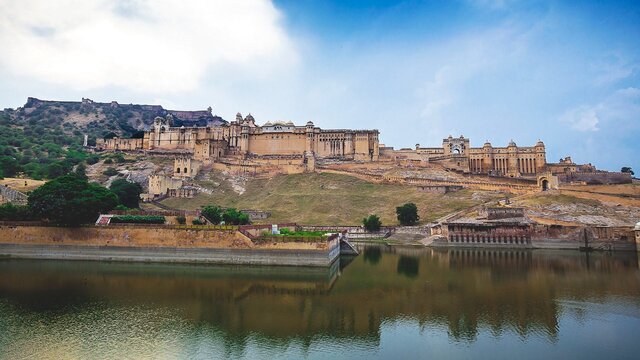
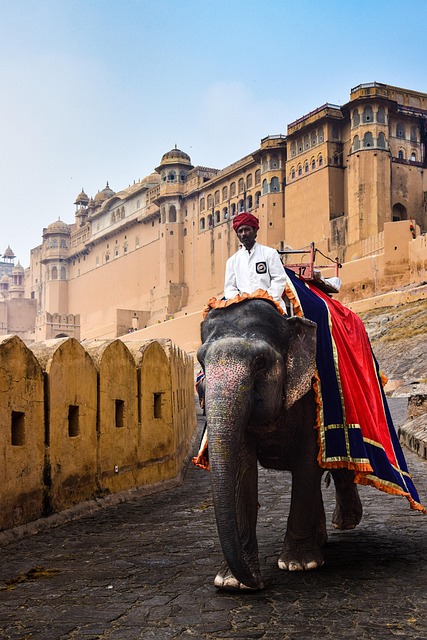
The day starts at Amber Fort, a UNESCO World Heritage hilltop fort roughly 11 km from central Jaipur. Your guide walks you through the Sheesh Mahal (Mirror Palace), the courtyards, and the fusion of Hindu and Mughal architectural styles. Arriving early — ideally by 8:30-9:00 AM — means cooler temperatures and noticeably shorter lines at the ticket counter and main gate before the bulk of day-trippers arrive from Delhi and Agra.
A short stop at this 16th-century stepwell just below Amber Fort. Its symmetrical staircases descending into the water make it one of the most photographed spots in the region — arriving in the same morning window as Amber Fort means fewer people in your shots than a midday visit would.
A drive-by and photo stop at the Jal Mahal, an 18th-century palace that appears to float in the middle of Man Sagar Lake. You view it from the shoreline rather than entering — the palace itself isn’t open to the public — so this stop is brief by design.
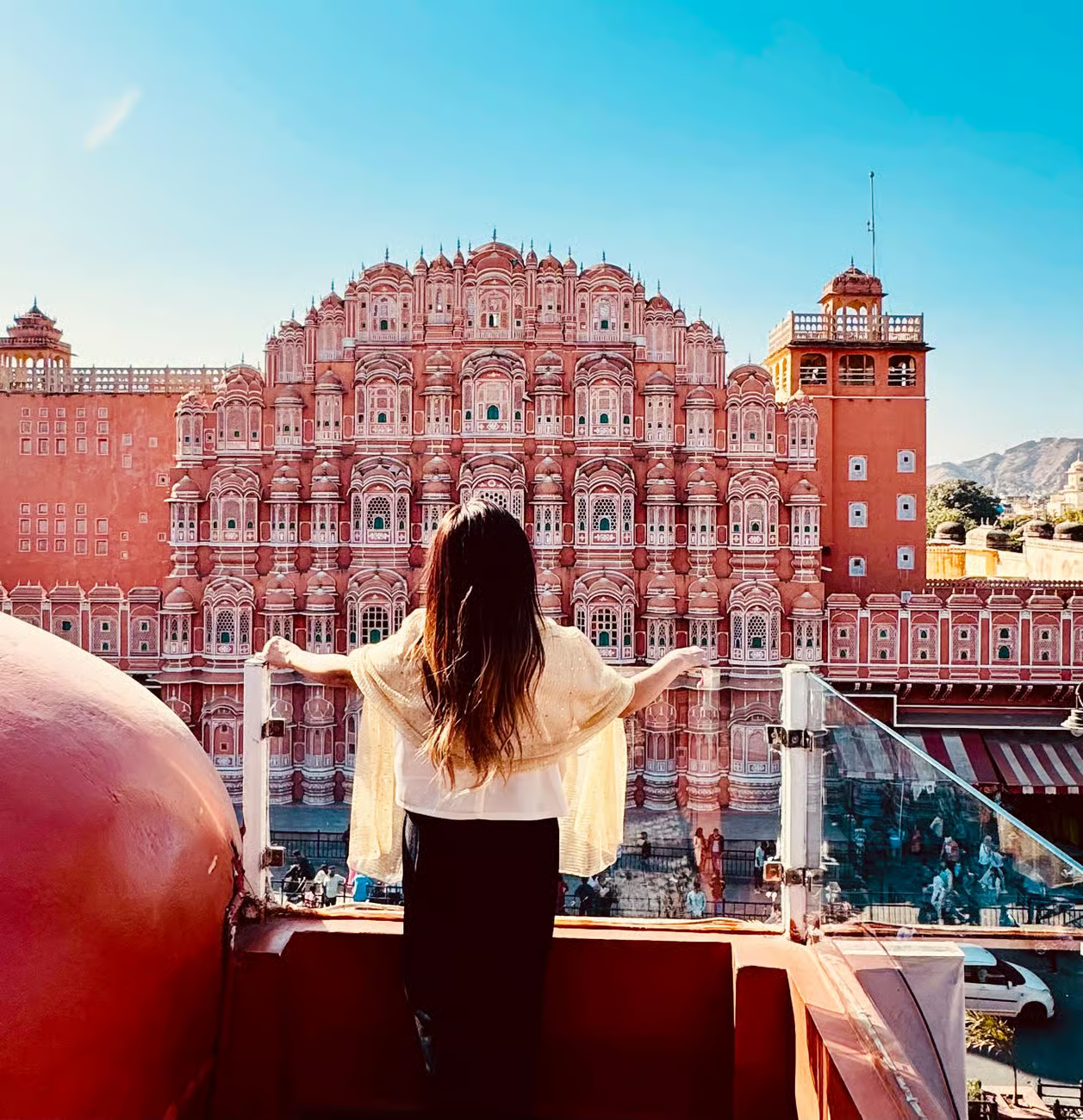
The iconic five-story sandstone facade of the “Palace of Winds,” with its 953 small windows, built so royal women could observe street festivals while remaining unseen from outside. The facade is best photographed from across the street in the late morning or early afternoon, when direct sunlight lights up the pink sandstone.
The former royal residence of Jaipur’s Maharajas, and still partly occupied by the royal family today. Your guide covers the courtyards, the museum’s textile and armory collections, and the Chandra Mahal, giving context on how the palace complex evolved across different rulers.
Right next to City Palace, this 18th-century astronomical observatory built by Maharaja Sawai Jai Singh II houses the world’s largest stone sundial, accurate to about two seconds. Your guide explains how several of the instruments are still used to demonstrate celestial positioning today.
The day closes at the lesser-visited Royal Gaitor cenotaphs — intricately carved marble memorials to Jaipur’s royal lineage, set in a quiet garden well away from the main tourist crush. It’s a deliberately slower, more reflective final stop after a day of busier landmarks.
October to March is the most comfortable window for a full day of outdoor walking, with daytime temperatures typically between 20-28°C. April to June gets hot enough (often 38°C+) that the Amber Fort courtyards and City Palace grounds are genuinely uncomfortable by early afternoon. July to September brings the monsoon — rain is usually short and intense rather than all-day, but it can reduce visibility at Jal Mahal and make Amber Fort’s stone steps slippery, so plan for a bit more flexibility in the schedule during those months.
Pink City: Jaipur’s popular nickname, after the terracotta-pink wash applied to buildings in the old walled city ahead of a royal visit in 1876 — a tradition still maintained today.
Amber Fort (Amer Fort): A UNESCO World Heritage hilltop fort about 11 km from central Jaipur, blending Hindu and Mughal architecture; the tour’s first and longest stop.
Sheesh Mahal: The “Mirror Palace” inside Amber Fort, its walls and ceilings inlaid with thousands of small mirrored glass pieces.
Panna Meena Ka Kund: A 16th-century stepwell near Amber Fort, known for its symmetrical staircases and traditional water-conservation design.
Jal Mahal: The “Water Palace,” an 18th-century structure that appears to float in the middle of Man Sagar Lake; viewed from the shoreline, not entered.
Hawa Mahal: The “Palace of Winds,” a five-story sandstone facade with 953 small windows, built so royal women could observe street life unseen.
City Palace: The former royal residence of the Maharajas of Jaipur, now part museum, part still-occupied royal complex.
Jantar Mantar: An 18th-century astronomical observatory built by Maharaja Sawai Jai Singh II, home to the world’s largest stone sundial.
Royal Gaitor: A cenotaph complex with intricately carved marble memorials to Jaipur’s royal family, quieter than the main monuments.
Cenotaph: A monument built in memory of someone whose remains lie elsewhere — the marble structures at Royal Gaitor commemorate Jaipur’s rulers.
| Included | Excluded |
| Hotel/homestay pickup and drop-off in Jaipur | Personal shopping expenses |
| Private air-conditioned vehicle (Sedan/SUV) | Camel/elephant rides at Amber Fort (optional add-on) |
| Licensed, professional guide for the full day | Tips for guide/driver (unless stated otherwise) |
| Entry tickets to all seven monuments on the itinerary | Travel insurance |
| Bottled water through the day | Albert Hall Museum entry (not on this itinerary — ask about add-on) |
| Parking fees and fuel | |
| Meals during the tour |
Travel Trip Tourist is a Bangalore-based experiential travel company offering curated group and couple tour packages across India — including Jaipur, Goa, Manali, Kashmir, Rajasthan, Mysore, Varanasi, and Udaipur — as well as international destinations like Bali, Thailand, and Sri Lanka.
This itinerary is planned and fact-checked by the Travel Trip Tourist team, drawing on route and monument details confirmed with local Jaipur guides.
How long does the Jaipur Full-Day Sightseeing Tour with Car & Guide take?
The tour runs approximately 8 to 9 hours, typically starting between 8:00-9:00 AM and finishing by early evening. Exact timing depends on your pickup slot and how long you choose to linger at each stop.
What is included in the Jaipur full-day tour price?
The ₹1,500 per person rate covers hotel pickup and drop-off, a private air-conditioned car, a guide for the full day, entry tickets to all seven monuments on the itinerary, bottled water, parking, fuel, and meals during the tour.
Which monuments are covered on this Jaipur sightseeing tour?
The itinerary covers Amber Fort, Panna Meena Ka Kund, Jal Mahal, Hawa Mahal, City Palace, Jantar Mantar, and the Royal Gaitor cenotaphs — the seven landmarks most first-time visitors want to see in Jaipur.
Is this a private tour or will I be grouped with strangers?
It’s a private tour. You travel in your own vehicle with your own guide, not on a shared coach with other travelers, so the pace and stop order can flex around you.
What is the best time of year for a Jaipur full-day sightseeing tour?
October to March is the most comfortable window, with daytime temperatures typically in the 20-28°C range. April to June gets very hot for a full day of outdoor walking, and July-September brings monsoon rain that can shorten visibility at Amber Fort and Jal Mahal.
What is the cancellation policy?
Bookings can be cancelled up to 24 hours in advance for a full refund. Contact Travel Trip Tourist directly if your plans change closer to the tour date.
Which languages is the guide available in?
Guides are available in English, with other languages such as Spanish, French, and Italian available on request — mention your preferred language when booking so it can be confirmed in advance.
Do I need to buy monument entry tickets separately?
No. Entry tickets for Amber Fort, City Palace, Jantar Mantar, and the other monuments on the itinerary are included in the price. If you’d like to add the Albert Hall Museum, ask when booking, as it isn’t part of the standard itinerary.
Is this tour suitable for families with kids or elderly travelers?
Yes, though Amber Fort involves some walking uphill and over uneven stone courtyards. The private vehicle and flexible pacing make it easier to adjust the day for children or travelers who need more rest breaks than a fixed-group tour would allow.
Can the itinerary be customized?
Yes. Since it’s a private tour, you can ask your guide to spend less time at a stop, skip one, or add an extra one (such as the local bazaars or Albert Hall Museum), subject to availability on the day.
What should I wear or bring for the tour?
A valid photo ID, sunglasses and sunscreen, comfortable walking shoes, and a camera. Amber Fort and City Palace both involve a fair amount of walking on stone surfaces, so lightweight, weather-appropriate clothing is recommended.
How far in advance should I book this Jaipur tour?
A day or two ahead is usually enough. Booking earlier is recommended during peak season (October to March) when guides and vehicles are in higher demand.

Member Since 2024

Leave a review